
A slow pulse, fainting spell, palpitations, or a low ejection fraction does not by itself determine whether you need an implanted heart device. The decision depends on the rhythm that was documented, whether the cause is reversible, how your heart has responded to treatment, and which device matches the risk.
Key takeaways
- A slow pulse alone does not establish pacemaker eligibility in Kharadi.
- An ICD is considered after dangerous ventricular rhythms or selected heart-failure risk assessments.
- ECG, rhythm monitoring, echocardiography, and reversible-cause checks guide device decisions.
- Ask what device type, expected benefit, risks, and follow-up schedule apply to you.
When does a slow rhythm justify a pacemaker?
Pacemaker eligibility in Kharadi depends on the documented rhythm diagnosis and its cause, not on one pulse-rate cutoff.
1. Symptomatic sinus-node dysfunction supports pacing when a 12-lead ECG, Holter monitor, event monitor, or longer ambulatory recording shows bradycardia or pauses that explain fainting, near-fainting, dizziness, fatigue, or poor exercise tolerance. Chronotropic incompetence—when the heart fails to increase its rate during activity—can also support a pacemaker.
No single minimum heart rate or pause duration automatically qualifies someone with sinus-node dysfunction.
2. Acquired Mobitz II, high-grade, or third-degree atrioventricular block generally warrants pacing when the cause is not reversible. Complete heart block usually warrants a pacemaker even without symptoms because impulses from the atria are not reliably reaching the ventricles.
3. Before permanent pacing, clinicians review beta blockers and other medicines, check thyroid function and electrolytes, and assess infection, ischemia, and sleep apnoea. Treating one of these causes can remove the need for a device. Sleep-related pauses alone are not a stand-alone indication.
A low pulse does not prove eligibility. Monitoring must show that the rhythm occurred with the symptom, because a brief clinic ECG can miss intermittent block, while an isolated slow reading may be harmless. Ask which rhythm was recorded, what caused it, and how it explains your symptoms.
Who is considered for an implantable cardioverter-defibrillator?
An ICD is considered after a person survives cardiac arrest caused by ventricular fibrillation or sustained ventricular tachycardia. This is secondary prevention: the device aims to prevent another dangerous event. Defibrillator implantation in Kharadi may also be discussed when testing shows a high future risk without a previous arrest, known as primary prevention.
Situations that can support an ICD include:
- Sustained ventricular tachycardia caused by a condition that is not reversible
- Cardiac arrest from ventricular fibrillation or sustained ventricular tachycardia
- Selected inherited electrical disorders, such as long-QT syndrome or Brugada syndrome
- Substantially reduced left-ventricular ejection fraction despite guideline-directed heart-failure treatment
A low ejection fraction alone does not automatically justify an ICD. After a myocardial infarction or revascularisation, clinicians may wait, continue optimised medication, and reassess ejection fraction because the heart can recover; implanting too early can expose you to infection, lead problems, inappropriate shocks, and other complications without established benefit.
The decision also considers the underlying disease, expected survival, functional status, competing illnesses, and your preferences. An ICD is useful only when meaningful survival and recovery are expected.
Collapse, sustained ventricular tachycardia, chest pain, severe breathlessness, or repeated rapid or slow pulse requires emergency care, not routine scheduling. Call local emergency services and do not wait for an outpatient device consultation.
How do a pacemaker, ICD, and CRT device differ?
A conventional pacemaker responds to a heartbeat that is too slow or fails to conduct properly. It supplies electrical pacing, but it cannot deliver a defibrillation shock for ventricular fibrillation.
| Device | Detects | Treats |
|---|---|---|
| Pacemaker | Slow rhythms and conduction failure | Bradycardia, pauses, and selected heart block through pacing; no shock for ventricular fibrillation |
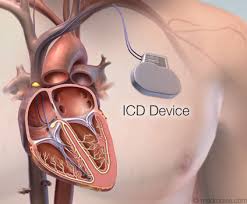
| ICD | Dangerous ventricular tachycardia or ventricular fibrillation | Terminates ventricular tachycardia with pacing or a shock and ventricular fibrillation with a shock; many ICDs also provide ordinary pacing |
| CRT-P | Ventricular timing delay in selected heart-failure patients | Resynchronisation pacing; no defibrillation capability |
| CRT-D | Ventricular timing delay plus dangerous ventricular rhythms | Resynchronisation pacing combined with ICD pacing and shock capability |
Cardiac resynchronisation therapy is specialised pacing for selected patients with heart failure, reduced left-ventricular ejection fraction, and electrical dyssynchrony, often shown by a widened QRS with left-bundle-branch-block morphology. CRT is not interchangeable with a standard single- or dual-chamber pacemaker: CRT-P provides resynchronisation, while CRT-D adds protection against sudden ventricular rhythms.
For anyone asking who needs a pacemaker or defibrillator in Kharadi, the rhythm diagnosis, echocardiogram, QRS pattern, and sudden-death risk determine the category. None of these devices treats every cause of fainting, palpitations, or heart failure; medication, ablation, or another evaluation may be the correct treatment.
Which tests prove that a device is the right first treatment?
Begin with a 12-lead ECG, medication review, blood tests for electrolytes and thyroid function, and an echocardiogram measuring left-ventricular ejection fraction. Symptoms alone do not establish eligibility: dizziness, fainting, palpitations, or fatigue must be linked to a documented rhythm and its cause.
Match monitoring to symptom frequency:
- Use a 24- or 48-hour Holter monitor when symptoms occur daily.
- Use an event monitor or longer ambulatory recorder when episodes are less frequent.
- Consider electrophysiology assessment for unexplained syncope with suspected conduction disease or tachyarrhythmia.
| Rhythm finding | What it may indicate | Possible treatment |
|---|---|---|
| Atrial fibrillation with slow conduction | Slow ventricular response | Medication adjustment, ablation, or pacing |
| Ventricular tachycardia | Risk of sudden cardiac arrest | Medication, ablation, or defibrillation |
| Sinus-node dysfunction | Inadequate impulse generation | Medication review or pacing |
| Inherited electrical disorder | Arrhythmia risk from an electrical syndrome | Medication, ablation, or defibrillation |
A device is the wrong first choice when bradycardia resolves after medication adjustment, or when the cause is an electrolyte disturbance, untreated sleep apnoea, transient infection, reversible ischemia, or fainting without a proven rhythm cause.
During a cardiac device consultation in Kharadi, ask which rhythm was recorded, what caused it, and how the evidence connects it to your symptoms. Also ask whether medication or ablation treats the cause before pacing or defibrillation is considered.
What should you expect from a cardiac device consultation in Kharadi?
Bring a complete record set to a cardiac device consultation in Kharadi. Use this checklist:
- 12-lead ECGs; Holter or event-monitor reports and recordings
- Echocardiogram reports, blood-test results, and discharge summaries
- Angiography or revascularisation records
- Every medicine, including dose and timing
- A timeline of fainting, palpitations, shocks, dizziness, or exercise intolerance
Ask which device is recommended and why:
| Option | What it does | Question to ask |
|---|---|---|
| Pacemaker | Treats slow rhythm or conduction failure | Could medication or ablation treat the cause? |
| ICD | Treats dangerous ventricular tachycardia or fibrillation | When will ejection fraction be reassessed? |
| CRT-P | Resynchronises selected failing hearts | Does electrical dyssynchrony justify CRT? |
| CRT-D | Combines resynchronisation with defibrillation | How will emergency and long-term follow-up work? |
Discuss pocket infection, bleeding, pneumothorax, lead displacement or malfunction, inappropriate ICD shocks, repeat procedures, generator replacement, equipment or test restrictions, and possible later device deactivation.
Follow-up includes clinic or remote interrogation, battery and lead checks, medication and shock review, and wound assessment. Contact the team promptly for fever, redness, drainage, swelling, repeated shocks, or a shock with persistent symptoms.
Dr Pramod Narkhede can provide a local option, but verify that the heart rhythm device specialist in Kharadi has implantation facilities, emergency backup, device interrogation, and long-term follow-up. Ask where urgent care occurs after hours.
Related product
 | Dr. Pramod Narkhede is a reliable and one of the Best Cardiologist in Wadgaon Sheri, Pune and Best Cardiac Surgeon in Wadgaon Sheri, Pune. View product → |
Frequently asked questions
When does a slow rhythm justify a pacemaker?
A pacemaker is considered when documented bradycardia, heart block, or pauses cause symptoms or carry a significant risk. Doctors also check for reversible causes such as medication effects, thyroid disease, electrolyte abnormalities, or sleep apnoea before recommending implantation.
Who is considered for an implantable cardioverter-defibrillator?
An ICD is considered for people who have survived cardiac arrest or sustained ventricular tachycardia, and for selected patients with reduced left-ventricular ejection fraction despite appropriate treatment. The decision depends on the rhythm history, heart function, underlying disease, and expected benefit.
How do a pacemaker, ICD, and CRT device differ?
A pacemaker treats slow heart rhythms by providing electrical impulses. An ICD detects and treats dangerous ventricular rhythms with pacing or a shock. A CRT device coordinates contraction between the ventricles for selected patients with heart failure and electrical conduction delay; some CRT devices also include defibrillation.
Which tests help prove that a cardiac device is the right first treatment?
The assessment can include a 12-lead ECG, Holter or event monitoring, echocardiography, blood tests, medication review, and evaluation for ischaemia or structural heart disease. An electrophysiology study or cardiac MRI is used when the rhythm diagnosis or risk remains uncertain.
What should you expect from a cardiac device consultation in Kharadi?
Bring ECGs, hospital records, medication lists, symptom dates, and details of fainting or palpitations. The specialist reviews the rhythm diagnosis, reversible causes, device options, implantation risks, battery and follow-up needs, driving considerations, and whether observation or another treatment is safer.