
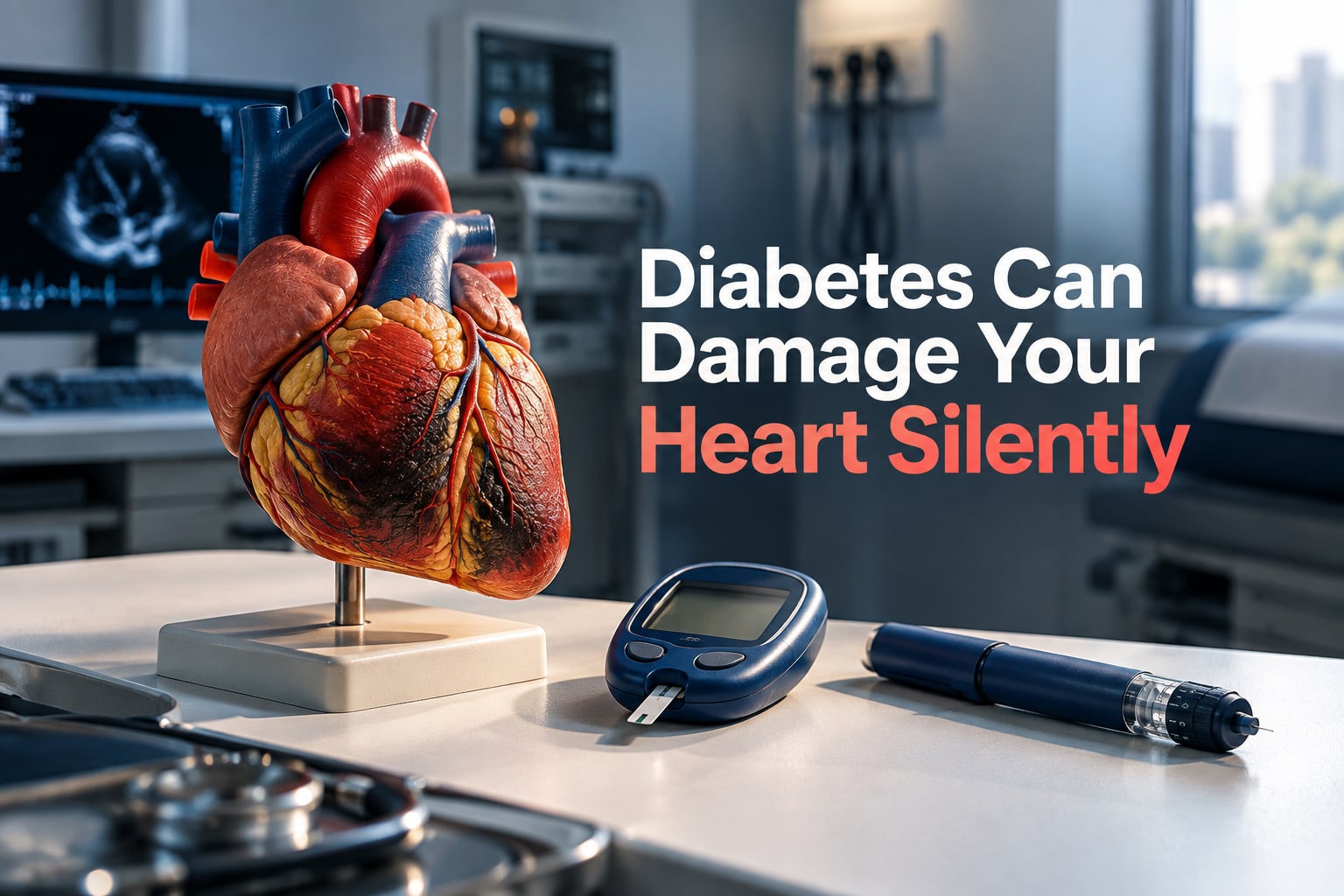
Persistently high blood glucose can injure the artery lining, speed plaque formation, stiffen blood vessels, and weaken the heart even before obvious symptoms appear. By the end, you will know which parts of the circulation are affected, which warning signs require emergency action, and which questions to raise during ongoing risk assessment.
Key takeaways
- Control blood glucose, blood pressure, cholesterol, and smoking risk together.
- Treat chest pressure, severe breathlessness, or sudden weakness as an emergency.
- Ask about kidney, eye, nerve, artery, and heart assessments during diabetes reviews.
- Do not rely on symptoms alone; diabetes-related cardiovascular damage can remain silent.
How high blood glucose changes arteries and the heart
Persistent high blood glucose injures the endothelium, the thin cell layer lining every blood vessel. Excess glucose promotes abnormal protein glycation, oxidative stress, and inflammation, so arteries lose their ability to widen normally.
Their walls become stiffer, and cholesterol-rich plaque builds faster, narrowing the channel that carries blood to the heart, brain, legs, kidneys, and other organs.
Understanding how diabetes affects blood vessels and the heart means looking beyond one blockage. Diabetes can impair small vessels and the heart muscle itself, while coronary plaque may spread through several arteries and smaller branches. Reduced blood flow can therefore occur even when a single large-vessel blockage is not obvious.
Prolonged damage can result in:
- Coronary artery disease, reducing blood supply to the heart muscle and causing angina or a heart attack
- Peripheral artery disease, restricting circulation to the legs and feet
- Cerebrovascular disease, including an ischaemic stroke or transient ischaemic attack
- Diabetic microvascular damage in the kidneys, eyes, and nerves
- Diabetic cardiomyopathy, in which the heart muscle becomes stiff, weak, or less able to pump
The combined problem is diabetes cardiovascular disease, and high glucose is only one part of it. Insulin resistance, high triglycerides, low HDL cholesterol, hypertension, smoking, obesity, kidney disease, and inflammation accelerate plaque formation and raise the chance of heart failure, stroke, and limb complications.
Lowering glucose helps, but it does not replace blood-pressure control, LDL cholesterol treatment, smoking cessation, weight management, and kidney protection.
The different forms of diabetes-related cardiovascular damage
These conditions do not damage the same tissue. Diabetes blood vessel problems can involve large arteries, tiny vessels, or the heart muscle itself. The distinction matters because leg wounds, stroke symptoms, kidney injury, and breathlessness point to different forms of diabetes cardiovascular disease.
| Condition | Main site | How it differs |
|---|---|---|
| Coronary artery disease | Arteries supplying the heart | Plaque can affect several vessels, smaller distal branches, and the coronary microcirculation. Blood flow may be seriously impaired even without one obvious major blockage. |
| Peripheral artery disease | Arteries supplying the legs and feet | Reduced circulation causes exertional leg discomfort, cold feet, or slow-healing wounds. Neuropathy can remove pain, so a person may have advanced disease without classic calf cramping. |
| Cerebrovascular disease | Brain arteries and neck arteries | Narrowing or blockage can cause a transient ischemic attack or stroke, affecting speech, strength, vision, balance, or coordination. |
| Microvascular damage | Tiny vessels in the kidneys, eyes, and nerves | Injury to these vessels causes diabetic kidney disease, retinopathy, and nerve damage. It is different from a large artery blockage. |
| Diabetic cardiomyopathy | Heart muscle | The muscle becomes stiff, enlarged, or weakened through metabolic injury, fibrosis, and impaired relaxation, even without coronary artery disease. |
These forms can overlap. For example, neuropathy can hide PAD symptoms, while kidney disease and hypertension can worsen coronary disease and diabetic cardiomyopathy.
Why risk factors and symptoms can be easy to miss
Diabetes approximately doubles the risk of heart disease and stroke because several threats often arrive together. Insulin resistance, high triglycerides, low HDL cholesterol, hypertension, smoking, obesity, kidney disease, and inflammation add strain to already vulnerable arteries. The result is diabetes cardiovascular disease risk even when glucose readings do not feel alarming.
A heart attack can cause little or no chest pain when autonomic neuropathy damages the nerves that normally signal discomfort. Diabetes heart disease symptoms may instead appear as:
- Shortness of breath or unusual fatigue
- Nausea, sweating, or dizziness
- Discomfort in the back, jaw, arm, or upper abdomen
A sudden or unexplained combination of these symptoms needs emergency assessment; waiting for crushing chest pain can delay treatment.
Leg circulation problems are also easy to overlook. Neuropathy can remove the calf pain that usually appears during walking, while reduced activity can hide exertional symptoms. A slow-healing foot wound, cold foot, colour change, or persistent numbness may be the first visible clue to peripheral artery disease.
An ankle-brachial index can read falsely high when diabetes stiffens and calcifies leg arteries, so toe-brachial pressure testing or another vascular test may be needed when suspicion remains high.
Which symptoms require emergency help
Call emergency services immediately for symptoms that are sudden, severe, new, or unexplained. Diabetes can blunt chest pain, so a heart attack may appear as breathlessness, unusual fatigue, nausea, sweating, dizziness, or discomfort in the back, jaw, arm, or upper abdomen rather than crushing chest pressure.
| Situation | Warning signs | Action |
|---|---|---|
| Possible heart attack | Chest pressure or pain; shortness of breath; cold sweat; nausea; faintness; or unexplained discomfort in the jaw, back, arm, or upper abdomen | Call emergency services now. Do not drive yourself. |
| Possible stroke | Face drooping, one-sided arm or leg weakness or numbness, slurred speech, confusion, sudden vision loss, severe imbalance, or a sudden severe headache | Call emergency services now, even if the signs disappear. Note the time they began. |
| Routine cardiology appointment | Repeated breathlessness or fatigue with activity, stable palpitations, gradually reduced exercise tolerance, or leg pain that predictably starts while walking and stops with rest | Arrange an appointment, but seek urgent help if symptoms occur at rest, intensify, or arrive with faintness or chest discomfort. |
These diabetes heart disease symptoms can be atypical, and diabetes blood vessel problems can affect several arteries at once. Check your blood glucose if you can do so without delaying help; low glucose can mimic sweating, shakiness, confusion, and weakness, but a possible heart attack or stroke still requires emergency assessment.
Do not wait for a routine visit to see whether a dangerous symptom settles.
How doctors assess and reduce diabetes-related vascular risk
Risk assessment combines glucose control with the factors that amplify diabetes cardiovascular disease. Ask for HbA1c, repeated blood-pressure readings, a lipid profile, kidney tests including estimated glomerular filtration rate and urine albumin-to-creatinine ratio, and a smoking review. The results show whether treatment needs to protect arteries, kidneys, or the heart together.
- Set an individual blood-pressure goal, often near below 130/80 mmHg when safe. Dizziness on standing, frailty, age, kidney disease, or a heavy treatment burden may require a different target.
- Discuss an SGLT2 inhibitor if you have type 2 diabetes with heart-failure or kidney risk, or a GLP-1 receptor agonist if you have high atherosclerotic risk. Kidney function, side effects, cost, and existing disease guide the choice.
- Do not start aspirin solely because you have diabetes. It is usually reserved for established atherosclerotic disease; primary prevention requires weighing bleeding risk against cardiovascular benefit.
- Ask whether symptoms or abnormal results justify an ECG, stress imaging, echocardiogram, or angiography. An angiogram is not a routine substitute for risk assessment, and a normal large artery does not exclude small-vessel dysfunction.
If coronary disease involves several vessels, especially the left anterior descending artery, a Heart Team may compare bypass surgery with stenting using anatomy, kidney function, surgical risk, frailty, and your preference. Dr Pramod Narkhede can help interpret whether angiography would change that decision.
Daily protection means taking medicines consistently, walking as advised, avoiding tobacco, limiting saturated fat and excess salt, and checking feet and blood pressure at home.
Related products
 | Cardiovascular Disease and Diabetes Dr. Pramod Narkhede is a reliable and one of the Best Cardiologist in Wadgaon Sheri, Pune and Best Cardiac Surgeon in Wadgaon Sheri, Pune. View product → |
 | Dr. Pramod Narkhede is a reliable and one of the Best Cardiologist in Wadgaon Sheri, Pune and Best Cardiac Surgeon in Wadgaon Sheri, Pune. View product → |
Frequently asked questions
How does high blood glucose affect blood vessels and the heart?
Persistent high blood glucose damages the endothelium through glycation, oxidative stress, and inflammation. Arteries become less able to widen, and plaque can build up more easily, increasing cardiovascular risk.
What types of cardiovascular damage can diabetes cause?
Diabetes can contribute to coronary artery disease, heart attack, stroke, peripheral artery disease, diabetic cardiomyopathy, heart failure, and damage to small blood vessels.
Why can diabetes-related heart and blood vessel problems be difficult to notice?
Nerve damage can blunt pain, and vascular disease can develop gradually. Some people have no warning symptoms before a heart attack, stroke, or other serious complication.
Which diabetes-related symptoms require emergency help?
Call emergency services for chest pressure or pain, severe breathlessness, fainting, sudden weakness or numbness on one side, trouble speaking, or sudden vision loss.